Competence vs. Intelligence
What You Know vs. What You Do When You Don’t Know


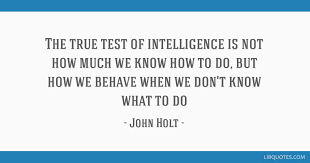
John Holt once said that the true test of intelligence isn’t how much we know how to do, but how we behave when we don’t know what to do.
I used to be good at that.
Not just in my twenties, when I had the confidence of youth. I mean throughout my life—until I started accepting verdicts that made me question it. I was the person who figured things out. The one people came to when they hit a wall. Resourceful. Driven. Give me an unfamiliar problem, and I’d find a way through it—not because I had all the answers, but because I trusted myself to navigate uncertainty.
I didn’t always know what to do. But I knew I’d figure it out.
Then, slowly, across years and relationships, I started accepting other people’s assessments of my limitations as truth. My parents taught me I was “shy” and that I deserved to be punished. My ex taught me I was “anti-social and sick.” By the time a manager told me I wasn’t good enough, I was already primed to believe it. He didn’t create the shame-based identity—he just activated one that had been installed over decades.
The erosion was so gradual I didn’t notice it happening.
I can still execute tasks. I can still deliver when the path is clear. But put me in a situation where I don’t know what to do—especially in certain contexts, with certain people, in certain environments—and I freeze.
For years, I thought this meant I was a fraud. That the old resourceful version of me was just youthful confidence I’d outgrown, or worse, a performance I couldn’t sustain.
What I’m realizing now is different: I didn’t lose my intelligence. I accepted limiting beliefs that made it inaccessible.
The Distinction I Missed
For a long time, I thought there was just “being smart” or “not being smart.” You either had it or you didn’t.
But there’s actually a critical difference between two types of capacity:
Competence is what you know how to do. It’s executing established procedures. Following known paths. Delivering on tasks where someone’s already figured out the method and you’re just applying it. It’s the kind of intelligence that shows up on tests, in performance reviews, in situations with clear right answers.
Intelligence—real intelligence—is what you do when you don’t know what to do. It’s resourcefulness. The capacity to encounter truly novel situations and figure out a path forward anyway. It’s trusting yourself to navigate uncertainty, to improvise, to find solutions that don’t exist yet.
I used to have both. But I didn’t understand they were separate things.
So when limiting beliefs started eroding my intelligence—my trust in my own resourcefulness—I couldn’t see what was happening. I just knew I was struggling more. And because my competence was still intact (I could still execute known tasks, still perform well in structured situations), I assumed the problem was me getting lazier, more anxious, less capable overall.
I didn’t realize I was internalizing a specific kind of limitation: the belief that I couldn’t handle uncertainty. That “not knowing” meant I was inadequate.
How I Let Resourcefulness Erode
The limiting beliefs didn’t start at work. The manager who pushed me over the edge wasn’t the first person to hand me a story about who I was—he just planted the seed in soil that was already poisoned.
My parents taught me I was “shy.”
Not that I felt shy sometimes, or that I was quiet in certain situations. They taught me that “shy” was what I was. An identity. A permanent trait that explained and excused everything about me that didn’t fit their expectations.
And they taught me something worse: that I deserved to be punished. Not for specific behaviors—for being fundamentally wrong somehow. For being the kind of person who needed correction, needed to be shaped into someone acceptable.
The message embedded itself deep: there’s something defective about you. Your natural way of being is a problem that needs to be fixed.
My ex taught me I was “anti-social and sick.”
Not that I needed different things than she did, or that we were incompatible. That I was pathologically wrong. That my way of connecting—or not connecting—with people was evidence of sickness. That my needs for solitude, for depth over breadth, for meaningful connection over social performance were symptoms of something broken in me.
The message reinforced what my parents had already installed: you’re defective. Your natural way of being is unacceptable.
These labels did specific damage.
They didn’t just make me doubt my competence or my intelligence. They instilled a deep shame that hindered my ability to connect meaningfully with anyone.
When you’ve been taught you’re “shy” as a fundamental flaw, you can’t just be quiet in a room—you’re performing your defect. When you’ve been told you’re “anti-social and sick,” you can’t just prefer depth to small talk—you’re manifesting your pathology.
The shame took over my true identity. I stopped being who I actually was and became the labels instead. I stopped trusting my own way of navigating the world and started monitoring myself through their judgments.
By the time I encountered the manager’s verdict—”you’re not good enough”—I was already operating from a shame-based identity. I’d already accepted that there was something fundamentally wrong with me, that I deserved punishment, that my natural way of being was sick.
He didn’t create the limiting belief. He just confirmed what the shame had already told me.
The soil was already poisoned. The belief that “not knowing what to do means I’m inadequate” was just the final seed planted on top of decades of being taught that who I am is inadequate.
Not my performance. Not my choices. My fundamental self.
The Belief That Uncertainty Means Inadequacy
Here’s the limiting belief that did the most damage:
“If I don’t know what to do, it means I’m not good enough.”
But that belief didn’t exist in isolation. It sat on top of a deeper foundation of shame:
I am shy. I am anti-social and sick. I deserve to be punished. There is something fundamentally wrong with who I am.
My parents installed the shame-based identity early. My ex reinforced it with pathological labels. My manager just activated it with enough force to make me collapse under it.
Here’s what makes this pattern so specific: I can handle feedback from peers. I can navigate critical statements from people I supervise. I’ve dealt with challenging situations, tough conversations, even conflict—when it comes from people who don’t have authority over me.
But when it comes from a figure of authority—someone who has potentially significant impact on my life circumstances—it hits completely differently. The shame doesn’t just activate. It overwhelms. I lose myself to it. The anxiety becomes all-consuming.
Because authority figures are the ones who installed the shame in the first place. My parents were my first authority figures, and they taught me I was fundamentally wrong and deserved punishment. My ex held authority in my intimate life and confirmed I was sick. The manager held authority over my livelihood and triggered the exact pattern they’d installed.
It’s not feedback I can’t handle. It’s authority wielding judgment.
When you’re already carrying the belief that you’re fundamentally defective, and an authority figure—someone with power over your circumstances—confirms it, uncertainty doesn’t just feel uncomfortable. It feels like exposure. Like proof that the labels were right all along, and now someone with power over your life has seen it too.
Once I accepted that identity, everything changed.
Encountering uncertainty stopped being a problem to solve and became a confirmation of my defectiveness. “I don’t know what to do” wasn’t a temporary state—it was evidence that I was shy, anti-social, sick, wrong, exactly as I’d been told.
When you’re operating from a shame-based identity, your whole system reorganizes around hiding the defect.
In healthy conditions, encountering the unknown triggers curiosity and resourcefulness. You think “interesting problem” and start exploring options. You feel permission to not know temporarily while you figure things out.
But when your core identity is “there’s something wrong with me,” encountering the unknown triggers self-protection instead. All your resources redirect to hiding the fact that you don’t know, managing the shame of being exposed, trying to look normal enough that no one notices you’re the sick, anti-social, shy person who doesn’t belong.
You can’t access your intelligence—your resourcefulness—because all available capacity is allocated to hiding who you’ve been taught you are.
The pattern:
Situation with uncertainty arises
Internal alarm: “I don’t know what to do = I’m being exposed as the defective person I am”
Shame activates (”You’re shy, anti-social, sick—of course you can’t handle this”)
All resources go to hiding the perceived defect
Freeze, or perform normalcy badly, or avoid entirely
Outcome reinforces shame: “See? You are fundamentally wrong. The labels were accurate.”
The limiting belief becomes self-fulfilling. Not because it was true, but because the shame-based identity changed how you allocated resources when facing the unknown.
Challenging the Shame-Based Identity
The limiting belief—”not knowing what to do means I’m inadequate”—feels true because it’s built on a foundation of shame that’s been there since childhood.
But here’s what I’m learning to see:
The labels aren’t who I am. They’re what I was taught to believe about myself.
“Shy” isn’t my identity. It’s a label my parents used to explain away behavior they didn’t understand or didn’t want to deal with.
“Anti-social and sick” isn’t my pathology. It’s what my ex called my need for depth, solitude, and meaningful connection over social performance.
“Deserving punishment” isn’t my fundamental state. It’s what I internalized from being treated as inherently wrong.
These labels created a shame-based identity that took over my true self. But shame isn’t truth—it’s just a very convincing lie that’s been reinforced for decades.
The real me—the one underneath the shame—is still there.
The person who was resourceful, driven, capable of navigating uncertainty. The person who could connect meaningfully when the connection was genuine. The person who had intelligence beyond just executing known procedures.
That person didn’t disappear. They just got buried under layers of toxic labels that became internalized shame.
The work isn’t becoming someone new. It’s shedding the identity that was imposed and reclaiming the one that was always real.
The shame-based identity says: “I’m shy, anti-social, sick, wrong—of course I can’t handle uncertainty.”
The true identity says: “I navigate uncertainty in my own way. I connect deeply when connection is genuine. I’m resourceful when I’m not performing someone else’s version of who I should be.”
This isn’t positive thinking. This is distinguishing between:
What I was taught I am (shame-based identity)
Who I actually am (true self that existed before the labels)
The labels felt true because they were installed early, reinforced constantly, and activated powerfully. But feeling true doesn’t make them accurate.
Remembering Who You Were
If you’re questioning whether you’re actually resourceful, whether you actually have intelligence beyond just executing known tasks, don’t look at how you perform in environments where authority figures have already activated your shame.
Look at contexts where authority isn’t the dynamic.
When have you handled feedback well?
For me: I can navigate critical feedback from peers. I can have tough conversations with people I supervise. I can handle conflict, uncertainty, challenging situations—when they don’t involve someone with authority over my life circumstances.
That’s not an accident. That’s evidence that my intelligence is intact. The freeze response isn’t universal—it’s specifically triggered by authority figures, because that’s who installed the shame.
When were you resourceful?
Before the labels took over. I remember solving problems no one taught me how to solve. Figuring out complex situations by improvising as I went. Being the person people came to when they were stuck because they trusted I’d find a way through.
I didn’t always know the answer. But I trusted I’d figure it out.
When did you trust yourself with uncertainty?
Times when you didn’t know what to do, and instead of freezing, you explored. You tried things. You adjusted based on what happened. You moved through the not-knowing toward knowing without treating the temporary state as exposure of your fundamental defectiveness.
When did you have drive?
Not the kind of drive that comes from fear or proving something. The kind that comes from genuine interest, from wanting to build something, from trusting that you could.
If you can find any evidence of these things—especially in contexts without authority dynamics—that capacity still exists.
It didn’t disappear. Authority figures just activated shame that made it inaccessible in their presence.
The Process: How to Actually Change a Shame-Based Identity
Here’s what I’m learning: you can’t just decide to stop believing the labels. You can’t think your way out of shame that’s been installed since childhood. But you can change it—it just requires a specific process.
Step 1: Identify the Shame-Based Labels
Not just “I struggle with uncertainty.” Get specific about the actual identity you’ve been carrying:
For me, it’s: “I am shy. I am anti-social and sick. I deserve punishment. There is something fundamentally wrong with who I am.”
These are the labels that created the shame. Everything else—the limiting beliefs about competence, the freeze response to uncertainty—flows from this poisoned foundation.
Write yours down. Make them explicit. You can’t shed an identity you won’t name.
Step 2: Get Leverage on Yourself to Change
This is the hardest part. Shame feels protective—it keeps you small, which feels safer than being exposed. You need a reason to do the painful work of shedding an identity you’ve carried for decades.
Ask yourself: What is this shame-based identity costing me?
For me:
It’s hindering my ability to connect meaningfully with anyone
It’s making me freeze in uncertainty because “not knowing” confirms I’m defective
It’s stealing my resourcefulness and replacing it with self-monitoring
It’s making me perform normalcy instead of being who I actually am
It’s making “shy, anti-social, sick” feel like truth instead of labels I accepted
That’s the leverage. When the cost of carrying the shame-based identity becomes unbearable, you have the motivation to shed it.
If the shame isn’t costing you enough yet, you won’t change it. You’ll just manage it. Get honest about what it’s stealing from you.
Step 3: Replace It With Your True Identity
You can’t just delete a shame-based identity—you have to reclaim the true one underneath it. And it has to be based on who you actually were before the labels, not who you wish you were.
The new identity needs to be:
Based on actual evidence: Who were you before shame took over?
Permission-granting: Allows you to be yourself instead of performing normalcy
Specific: Not vague affirmations, but concrete truth about who you are
For me, I’m replacing “I am shy, anti-social, sick, defective” with:
“I am someone who connects deeply when connection is genuine. I navigate uncertainty in my own way. I’m resourceful when I’m not performing someone else’s version of who I should be. There’s nothing wrong with my fundamental self.”
That’s not manufactured confidence. It’s based on actual evidence: the person I was before I accepted the labels, the times I was resourceful, the connections I did make that were meaningful, the uncertainty I did navigate successfully.
The true identity gives me permission to be who I actually am instead of hiding who I’ve been taught I am.
The Practice:
When you catch yourself operating from the shame-based identity—monitoring yourself through their judgments, treating uncertainty as exposure of your defect—interrupt it:
Name the shame-based label: “I’m running the identity that I’m shy/anti-social/sick/defective”
Remember what it’s costing you: “This shame is hindering my connection, stealing my resourcefulness, keeping me stuck”
Return to true identity: “I connect deeply in my own way. I’m resourceful when I’m not performing. There’s nothing fundamentally wrong with me.”
Take one action based on true identity: Connect in a way that feels genuine, ask one question, take one step into uncertainty without treating it as exposure
It won’t feel natural at first. The shame-based identity has been there longer. But every time you interrupt the pattern and act from your true identity instead, you’re reclaiming yourself.
Over time, the true identity becomes stronger than the imposed one.
It ain’t easy. But it’s possible.
If You’re Here
If you’ve been judging yourself because you can execute known tasks but freeze when you don’t know what to do, read this carefully:
The shame-based identity that makes your intelligence inaccessible wasn’t installed by one person or one event. It was cultivated over time by the people who were supposed to protect you.
Maybe your parents taught you that you were “shy” or “too sensitive” or “difficult”—labels that became your identity instead of just descriptions of temporary states.
Maybe they taught you that you deserved punishment for being fundamentally wrong somehow.
Maybe a partner taught you that your natural way of being was “anti-social” or “sick”—pathologizing your needs for solitude, depth, genuine connection.
Maybe a boss or a teacher or a mentor delivered the final verdict that confirmed what you’d already been taught: there’s something defective about you that makes you inadequate.
But here’s what matters: the labels aren’t who you are. They’re what you were taught to believe about yourself.
The shame those labels created—the deep sense that there’s something fundamentally wrong with you—isn’t truth. It’s just a very convincing lie that’s been reinforced for so long it feels like identity.
Your true self—the one who was resourceful, driven, capable of connecting meaningfully, able to navigate uncertainty—didn’t disappear. It got buried under toxic labels that became internalized shame.
The work is shedding the shame-based identity and reclaiming the true one.
It ain’t easy. You can’t just decide to believe something different. You have to:
Identify the specific shame-based labels you’ve been carrying
Get honest about what they’re costing you (that’s your leverage)
Reclaim your true identity based on who you actually were before the labels
Practice acting from that true identity until it becomes stronger than the imposed one
The resourcefulness you used to have—the drive, the ability to connect deeply, the trust in yourself to figure things out—didn’t disappear. It got hindered by shame that took over your true identity.
John Holt was right: the real test of intelligence is what you do when you don’t know what to do.
But first, you have to challenge the shame that says not-knowing is proof you’re defective instead of just the starting point of figuring it out.
Your intelligence is still there. Your resourcefulness is still there. Your true self is still there underneath the labels.
You just have to stop accepting the shame-based identity other people handed you—and reclaim who you actually are.
It’s hard work. But it’s possible.
Stay grounded—and remember who you were before shame told you that you weren’t enough.